

When starting an online business, many entrepreneurs face the same question: Should I sell on a marketplace or build my own website? This marketplace vs website decision can shape your online business success in both the short and long term.
At first glance, marketplaces look very attractive—instant traffic, built-in payment systems, and zero coding. But here’s the truth: while they can give you a quick start, they also come with their own costs and limitations.
We’ll break down the difference between a marketplace and your own website so that you can make the right choice for your business.
Top 4 Differences Between a Marketplaces and Your Own Website:
1. Marketplace vs Website: Difference in Effort
Building a marketplace is like renting a stall in a busy mall. You can move in quickly, but you are restricted to your own space.
Meanwhile, creating your own website is like building your own standing store. You put in more effort up front, but you control everything. That’s one of the biggest pros and cons of marketplace selling compared to owning a website.
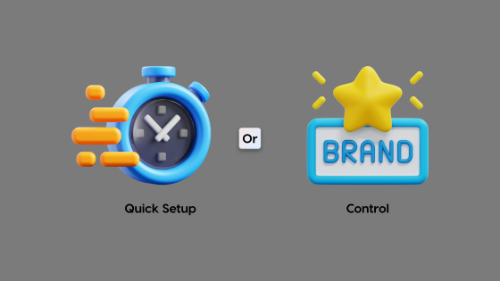
- Marketplace: Quick sign-up, pre-built systems, but limited customization.
- Own Website: Requires setup and branding, but you decide the design, features, and customer experience.
- Bottom line: A website demands more initial effort, but the long-term payoff is worth it.
2. Marketplace Disadvantages and Their Schemes
Here’s where most entrepreneurs get caught. Marketplaces often run schemes that prioritize their brand over yours such as:
- Promoting their own products or “house brands” above yours.
- Changing fees and commissions that eat into your profit.
- Controlling the rules, algorithms, and even customer relationships.
“The Hidden Costs of Online Marketplaces" If you rely too much on a marketplace, your business becomes vulnerable to their decisions.” - Forbes
3. More Control Over Your Brand versus Amenities
With your own website, you’re in full control:
- You own your customer data.
- You decide how your products are displayed.
- You set your own pricing without marketplace restrictions.
- You can add tools like chatbots, loyalty programs, or blogs.
This freedom lets you build a long-term brand identity, not just chase short-term sales.
3. More Control Over Your Brand versus Amenities
Here's the bottomline, the marketplace model thrives on attracting the maximum number of buyers. To do this, they incentivize aggressive discounts, flash sales, and vouchers that set the expectation that the lowest price always wins.
While this may sound good for the consumer in the short term, it comes at the expense of sellers’ profitability and brand value.
81% of Filipino online marketplace shoppers consider the “lowest price” as their top buying factor - 2023 Statista Report
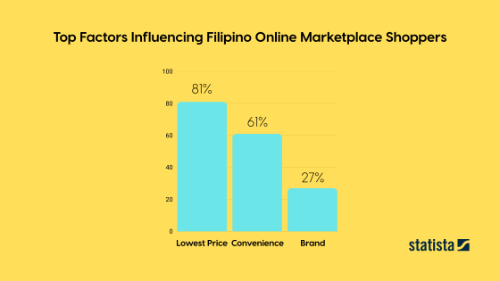
Merchants end up caught in a relentless race to the bottom, sacrificing margins just to keep up with competitors. Over time, this makes it harder to reinvest in quality products, marketing, or customer service. For brands trying to establish themselves, constant price-cutting dilutes differentiation and cheapens brand positioning. Instead of being known for unique value, sellers become interchangeable vendors competing on cents.
Worse, reliance on marketplaces creates vulnerability. Sellers don’t own their customer relationships—the platform does. So even after absorbing price cuts, they don’t build loyalty or long-term equity.
For Philippine SMEs, this race-to-the-bottom model is unsustainable and one of the BIGGEST differences when it comes to selling on a marketplace vs website.
The smarter path forward is investing in owned channels like your own branded eCommerce store where you can set your own pricing, control customer experience, and build lasting relationships beyond price wars.
Difference Between a Marketplace and Your Own Website FAQs:
Which is cheaper: marketplace or website?
Marketplaces seem cheaper at the start since you don’t need to pay for web hosting or design. However, most marketplaces charge transaction fees, listing fees, and commissions on every sale. Over time, these costs add up and reduce your profit margins.
On the other hand, a website requires upfront investment in a domain, hosting, and possibly design. But once built, you don’t pay commissions per sale. This makes it more cost-effective long-term, especially if your sales volume grows.
Tip: If you’re just starting, you can test a marketplace, but plan to move toward your own website as your customer base expands.
Can I use both a marketplace and my own website?
Yes—and in fact, this is often the best strategy. Marketplaces can be used to give quick visibility and access to a wide audience, while your own website helps you build a long-term brand and retain loyal customers.
Many businesses use marketplaces as a lead generator—once buyers discover their products, they guide them to their own website for repeat purchases, exclusive offers, and better customer service.
This approach is called an “omnichannel strategy,” and it combines the strengths of both platforms.
Is it hard to build your own website?
Not anymore! Thanks to no-code website builders and e-commerce platforms, creating a professional website has never been easier. You don’t need to learn coding or hire an expensive developer.
Most modern website builders offer:
- Drag-and-drop editors for easy design.
- Artificial Intelligence to grow and scale.
- Mobile-friendly templates so your site works on phones and tablets.
- Built-in e-commerce tools like payment gateways, inventory management, and SEO features.
Website building that once took months can now be done in just a few days or weeks. And as your business grows, you can scale your site with advanced features like chatbots, email marketing, and customer loyalty programs.
Final Thoughts
At the end of the day, the BIG difference between a marketplace and your own website boils down to a simple choice: convenience or control.
Marketplaces are a great starting point if you want quick exposure and easy setup. They let you ride on their existing traffic, but the trade-off involves sharing your profits, losing ownership of customer relationships, and risking being overshadowed by the marketplace’s own brand.
On the other hand, having your own website puts you in the driver’s seat. You control the design, pricing, customer data, and long-term strategy. More importantly, you’re not just making sales, you’re building a sustainable brand identity that people will remember and return to.
Think of it this way:
- Marketplaces rent you space, but they own the mall.
- Your website is your home—you invest once, and it keeps paying off for years to come.
- If you want true independence, stronger profits, and long-term growth, the smart move is clear: start building your own website today and future-proof your business.
Prosperna, Your Partner to eCommerce Success
Prosperna is an all-in-one AI-powered eCommerce platform for SMEs, entrepreneurs and digital creators. Our mission is to empower 1 million businesses with simple and affordable eCommerce software with the power of AI.
In fact, we are so passionate about helping small-to-medium sized businesses, entrepreneurs and content creators that we’re giving you a free account forever!
Want to create your online store?
Create your FREE-forever Prosperna account.
Comments
Loading comments...